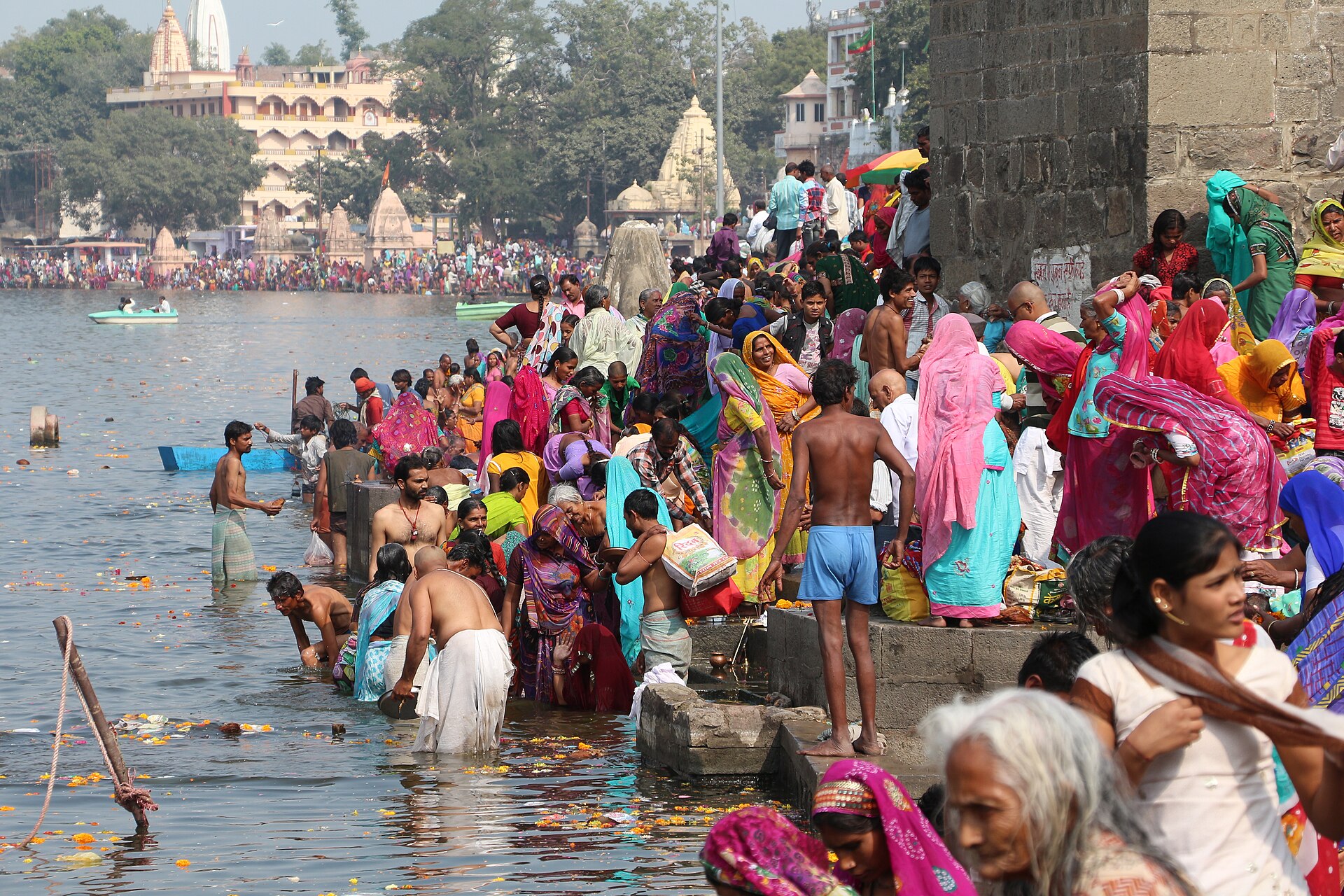
Omkareshwar Jyotirlinga temple rising above the Narmada River on the Om-shaped Mandhata Island
Madhya Pradesh · Island Shrine

Omkareshwar

The sacred island of Mandhata where the Narmada and Kaveri rivers meet — enshrining the 4th Jyotirlinga on an island naturally shaped like the sacred syllable Om (ॐ).

DistrictKhandwa, Madhya Pradesh
Best TimeOctober to March
Suggested Stay1 night / 2 days
From Indore~78 km · ~1.5 to 2 hrs
Ideal ForPilgrims, Couples, Families
About Omkareshwar

The Sacred Island of the Narmada

Omkareshwar is one of India's most profoundly sacred pilgrimage destinations — a natural island in the Narmada River whose shape mirrors the Sanskrit syllable Om (ॐ), considered the primordial sound of the universe in Hindu philosophy.

The island, called Mandhata or Shivapuri, is formed where the Narmada and Kaveri rivers meet and encircle it. The Omkareshwar Jyotirlinga temple — one of the twelve holiest Shiva shrines in Hinduism — sits at the heart of this island, drawing pilgrims from across India.

Omkareshwar is most commonly visited in combination with Ujjain as a twin-Jyotirlinga pilgrimage, making it one of the most spiritually complete journeys in Madhya Pradesh. The journey between the two shrines takes approximately 1.5 to 2 hours by road.

The atmosphere at Omkareshwar is more intimate and serene than Ujjain — smaller crowds, the sound of flowing water, and the peaceful rhythm of boat rides across the Narmada create a contemplative experience that remains with travellers long after the visit.
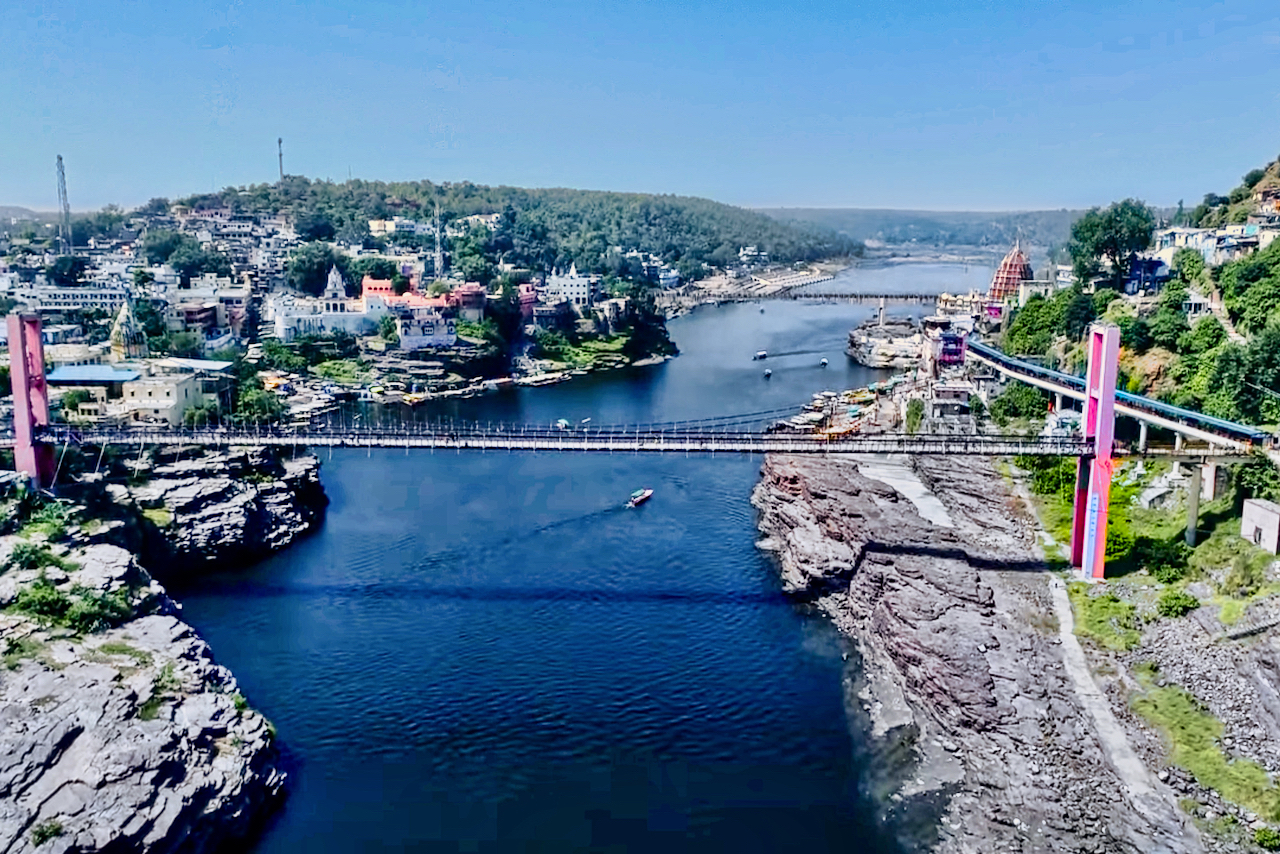
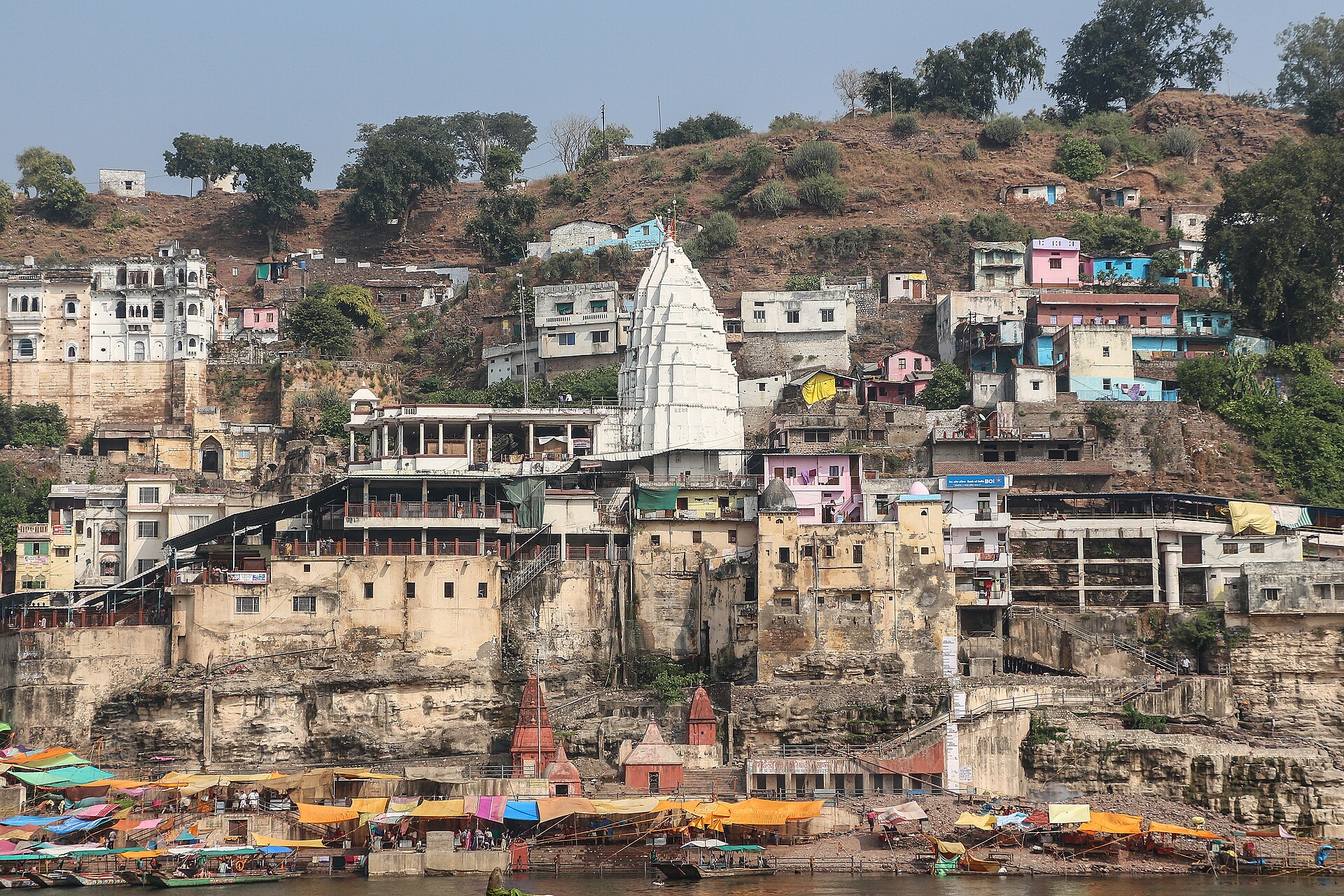
The Om-shaped Mandhata island at Omkareshwar seen from the riverbank with the Narmada surrounding it
Key Attractions

Places to Visit in Omkareshwar

Mamleshwar (Amreshwar) Temple

Situated on the mainland's southern bank of the Narmada, directly opposite the island. Tradition holds that a complete Omkareshwar pilgrimage requires visiting both the Omkareshwar temple on the island and Mamleshwar on the mainland. The two together form the single Jyotirlinga of Omkareshwar.

Mandhata Island Parikrama

The circumambulation (parikrama) of the island follows a 7-km path along the riverbank through small temples, bathing ghats, ashrams and shrines. Considered deeply meritorious, the parikrama is typically completed barefoot by devout pilgrims and takes 2 to 3 hours at a steady pace.

Siddhanath Temple

A 10th to 11th century Shiva temple celebrated for its extraordinary carved friezes — rows of elephants, horses, celestial maidens and mythological scenes that rank among the finest sculptural heritage of central India. Not to be missed by anyone with an interest in temple architecture.

Ahilya Ghat & Nagar Ghat

The main riverfront ghats are serene spaces for ritual bathing, aarti participation and quiet contemplation beside the Narmada. Dawn and dusk at these ghats carry a particular stillness — the sound of temple bells, flowing water and devotional chants creates a deeply meditative atmosphere.

24 Avatars Shrine Group

A group of ancient stone structures on the island depicting Vishnu's 24 avatars. An important secondary pilgrimage site for Vaishnava devotees visiting Omkareshwar alongside the Shaivite Jyotirlinga temple.

River Confluence Viewpoint

The point where the Narmada and Kaveri rivers converge near the island. The confluence is considered highly sacred in Hindu tradition — the site of ritual bathing and offering that draws pilgrims from across India at festival times.

Travel Information

Planning Your Omkareshwar Visit

Best Time

  • Oct – Mar: Ideal weather; comfortable for parikrama and boat rides.
  • Jul – Sep: Narmada is full; lush scenery; occasional travel disruptions possible.
  • Apr – Jun: Intense heat; less suitable for the 7-km island parikrama on foot.

Maha Shivaratri — Largest annual gathering; accommodation fills completely weeks in advance.

How to Reach

  • ✈ By AirDevi Ahilya Bai Holkar Airport, Indore (IDR) — approximately 78 km. Travel time: 1.5 to 2 hours by road.
  • By RailOmkareshwar Road Station on the Indore–Khandwa line. From the station, take a taxi or auto-rickshaw (~13 km) to the main ghat.
  • By RoadRegular state buses and private taxis from Indore (~78 km), Khandwa (~65 km) and Ujjain (~80 km).
  • ⛵ To the IslandCross via suspension footbridge (on foot) or take a local wooden boat from the main ghat — the preferred approach for many pilgrims.

Visitor Tips

  • Dress modestly — traditional attire recommended; shoulders and knees covered
  • Remove footwear before entering all temples
  • For the parikrama: wear comfortable footwear for the 7-km route; start early morning to avoid midday heat
  • Photography is generally permitted on the ghats and riverbank; restricted inside temple sanctums
  • Accommodation on the island is limited — book in advance for festival periods
  • Combine with Ujjain for a complete Jyotirlinga circuit (2N/3D recommended)
FAQ

Omkareshwar — Common Questions

  • Why is Omkareshwar shaped like Om?

    The Mandhata Island at Omkareshwar is formed by the confluence of the Narmada and Kaveri rivers, which encircle the island in a natural configuration that closely mirrors the Sanskrit syllable Om (ॐ) when viewed from above. This geographical coincidence has long been considered a divine sign, making the island a uniquely sacred site in Hindu tradition. The Jyotirlinga here — Lord Shiva as the primordial Om sound — is believed to be the embodiment of this cosmic syllable.

  • Can I visit Omkareshwar and Ujjain in the same trip?

    Yes — combining Omkareshwar and Ujjain in a single pilgrimage is the most popular Jyotirlinga trip we arrange. The two destinations are approximately 80 km apart. We recommend 2 nights and 3 days for a comfortable circuit — typically one night near Omkareshwar and one night in Ujjain, with transport and darshan arrangements included. Contact us for a personalised itinerary and quote.

  • What is the Mandhata Island parikrama?

    The parikrama is the circumambulation (clockwise walk) around Mandhata Island — a 7-km route along the riverbank through ghats, small shrines, and ashrams. It is considered a meritorious practice that connects pilgrims to the island's sacred geography. Most pilgrims complete it barefoot. The route passes the Siddhanath Temple and several riverfront ghats. The walk takes approximately 2 to 3 hours at a gentle pace and is best started in the early morning.

  • What is the best time to visit Omkareshwar?

    October to March is the most comfortable season. The Narmada is calmer, the weather is pleasant for the parikrama walk, and boat rides are safe. Maha Shivaratri brings the largest gathering. Monsoon months (July to September) are visually beautiful with the full Narmada, but can bring travel disruptions. Avoid April to June due to extreme heat.

Plan Your Omkareshwar Pilgrimage

We arrange Omkareshwar trips — often combined with Ujjain for the twin-Jyotirlinga circuit. Get a personalised quote today.